Sam Krause · 8 October 2026
Climate Resilience Metrics Guiding Volunteer Efforts in Quietwald's Restoration Zones
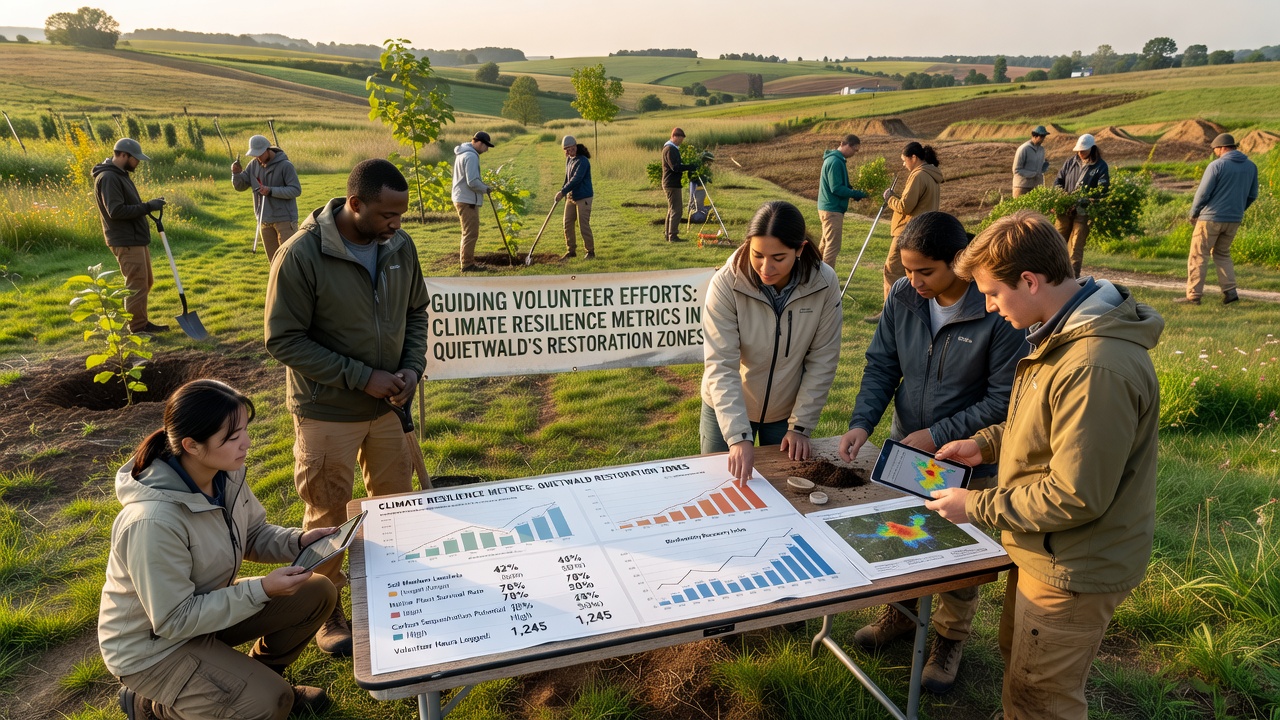
Climate resilience metrics provide structured data that directs volunteer activities across Quietwald's restoration zones, where teams focus on soil stabilization, species diversity tracking, and water retention improvements. These measurements include indices for canopy density, root biomass accumulation, and microclimate temperature fluctuations, all collected through standardized protocols that volunteers apply during scheduled site visits. Observers note that such metrics allow precise allocation of labor hours toward areas showing the greatest deviation from baseline recovery targets established in 2024 monitoring reports.
Core Metrics Driving Site Selection
Restoration zones in Quietwald rely on a set of quantifiable indicators that volunteers record at regular intervals, including percent ground cover by native grasses, infiltration rates measured in millimeters per hour, and counts of indicator invertebrate species per square meter. Data from these assessments reveal which plots require immediate intervention, such as additional mulching or native seed dispersal, while other sections demonstrate sufficient progress under current conditions. Researchers from regional forestry institutes have integrated satellite-derived vegetation indices with on-ground volunteer observations to refine zone boundaries each quarter, ensuring efforts concentrate where resilience scores fall below established thresholds.
One study coordinated through European forest monitoring networks showed that plots with infiltration rates under 15 millimeters per hour benefited most from volunteer-installed contour logs and organic matter additions during the spring cycle. Volunteers trained in these protocols use portable sensors to log readings directly into shared databases, which then generate priority maps updated weekly for field teams.
Volunteer Deployment Patterns
Training sessions for new participants emphasize accurate metric collection rather than general planting techniques, with certification requiring demonstrated proficiency in three core measurements before individuals join active crews. Groups typically divide into measurement teams and intervention teams, the former documenting conditions while the latter executes targeted actions based on the latest readings. This division reduces redundant work and aligns daily outputs with long-term resilience goals tracked through cumulative zone reports.
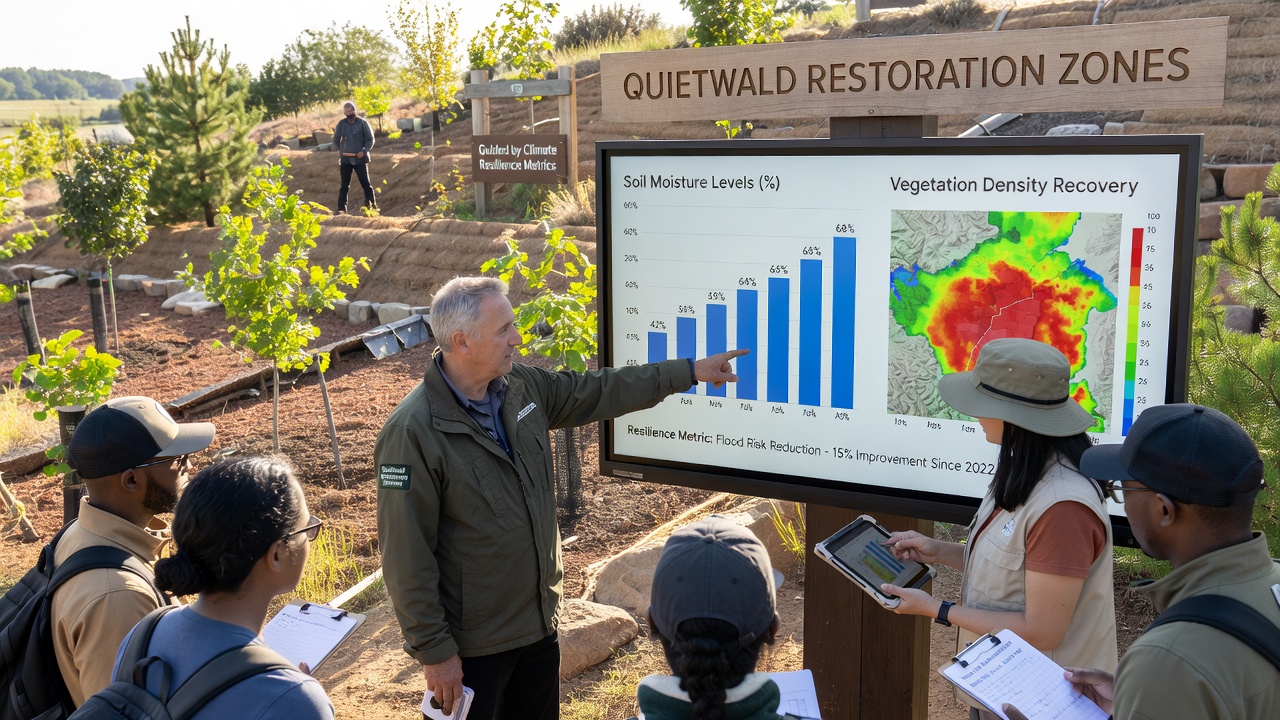
October 2026 schedules have incorporated expanded evening monitoring shifts to capture seasonal temperature swings that influence overwintering survival rates of recently established seedlings. Figures released by the Quietwald coordination office indicate that 142 certified volunteers contributed 3,800 documented hours between January and September of that year, with metric-guided assignments accounting for 78 percent of total site visits. Coordination software flags zones where resilience scores improved by at least 12 percent following volunteer interventions, allowing resources to shift toward adjacent areas still requiring attention.
Integration with External Data Sources
Quietwald teams cross-reference local volunteer-collected metrics against broader datasets from the European Environment Agency climate adaptation indicators and the Canadian Forest Service resilience monitoring framework. These comparisons help identify whether observed improvements align with patterns documented in comparable temperate forest systems elsewhere. Volunteers receive summarized trend reports derived from these external sources during monthly briefings, enabling them to adjust techniques such as species selection or mulching depth when local data diverges from regional averages.
Case examples include a 12-hectare meadow section where volunteer-recorded increases in native forb diversity from 8 to 23 species per plot prompted a reduction in supplemental watering frequency, freeing crews for neighboring zones with persistent drought stress indicators. Another restoration area showed soil organic carbon gains of 1.8 percent over 18 months after metric-directed incorporation of leaf litter and biochar, prompting replication of the same amendment ratios at three additional sites.
Conclusion
Metric-driven coordination continues to shape how volunteer resources address specific resilience gaps throughout Quietwald's restoration zones, with ongoing data collection supporting iterative adjustments to intervention strategies. The approach links direct field measurements to larger-scale environmental monitoring systems, producing documented progress across multiple indicators simultaneously. Future updates scheduled for late 2026 will incorporate refined thresholds derived from the accumulated volunteer dataset, further aligning on-site efforts with measurable recovery trajectories.